23.8.16

Vive la rentree!


The rest of the heiva, July and most of August have passed in a big long blur! It's been great, but exhausting, and I must say the return to school last week is a most welcome breather!
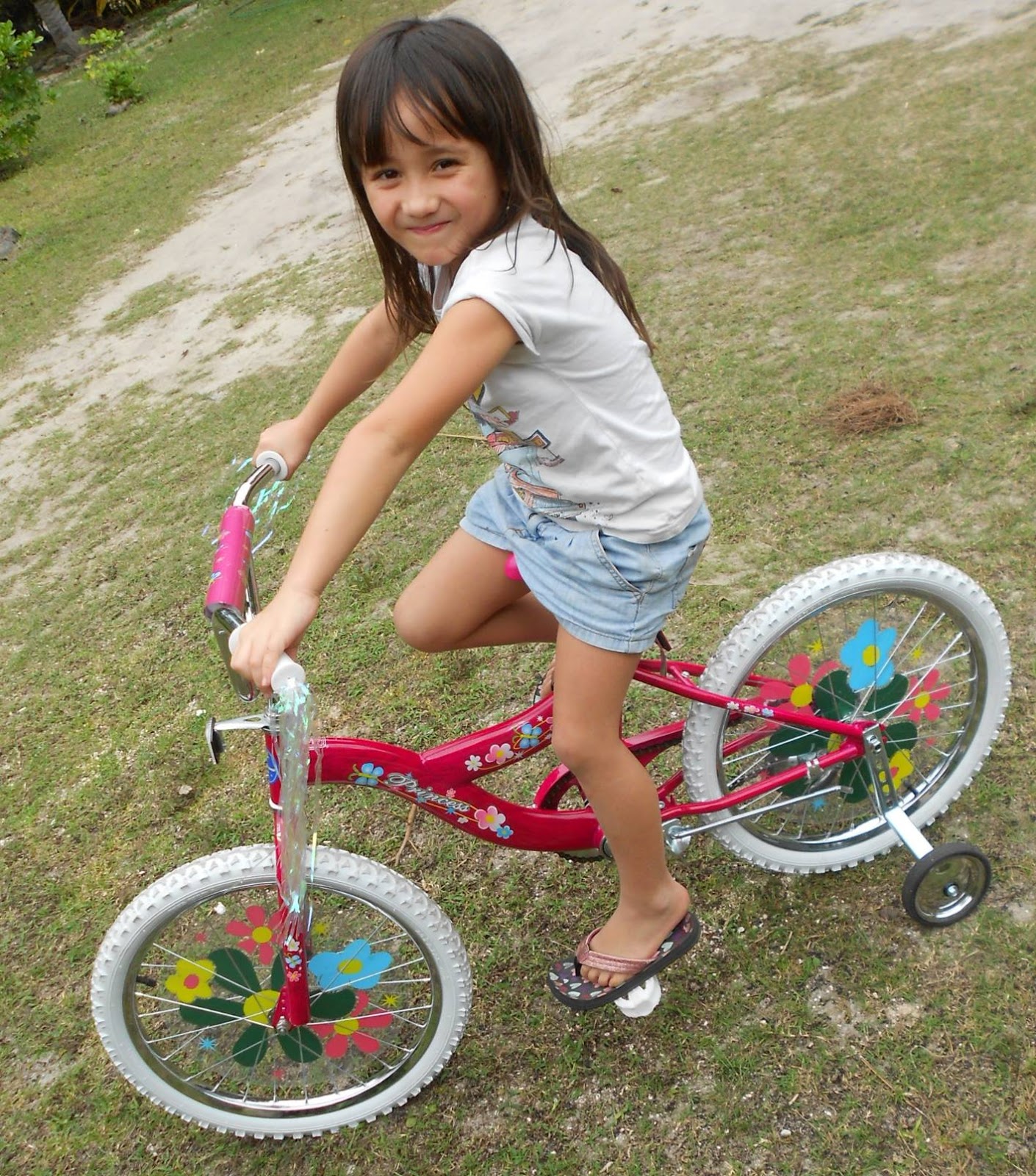
 We celebrated Heimana turning 7, she got a new bike.
 
Then it was the horse races on the 14th, after never saying never, Viriamu rode his champion and won easily, despite having a kilo or two on his previous jockey!
 Amai spent some time with dad, male bonding!!

The whales made their appearance on cue for the start of August, and kicked off our busy season. We haven't really stopped since.


Between all the work we still managed to have a little bit of fun, toasting marshmallows....

....flying kites,
......and as August has been mostly warm and sunny we've spent time on the beach and in the water!


I have been managing to keep even busier with my translating work - it's fun, absorbing, time-consuming and I love it, so am now trying to juggle that into the schedule......add four starving puppies that we've adopted into the mix and you may have an idea why I've been off the blog for a bit.
 
During all this Matotea also made a first solo trip, to Tahiti to shop for everyone's back-to-school supplies and visit meme in Mahina! A big step for my ever growing girl!
 
She has suddenly got back into loom bands (elastic band bracelets) and I have to say is REALLY good at following YouTube tutorials, so we have once more a houseful of little elastic bands and bracelets! But I won't complain too much about finding the little bands EVERYWHERE, as it really keeps her occupied and she's even able to design her own patterns now. Glad to see the craft genes have been passed on!
Lastly, it was someone else's birthday a week or so ago, here you go Granny!


2.7.16

Opening day!

The opening of the heiva is a much awaited day in our home, not least because of the fireworks. Yesterday evening the kids had fun 'ooohing!' and 'aahing' over the annual display, and the new flashing toys that you can win at the game-stands (including a multi-colored flashing saber - OMG!!!!).
But it was also the day of the opening parade, so a big day for Viriamu's horse association. Matotea made me proud, parading on horseback alone, Heimana was going to mount with papa, but got scared at the last minute, and Amai made it once around the parade ground, without too much wriggling and moaning! It was a beautiful sight!
 
The big advantage of using foliage as decoration - the horses get a tasty snack at the end of it all!

In theory, the mayor had combined the parade with a celebration of  French Polynesian Autonomy (officially celebrated on June 29th), raising the flag and meeting out new chief of police, we avoided that, because the horses get antsy just hanging around! Today, July 2nd, is a more sombre celebration, that he probably didn't menton in his speech - 50 years since the first nuclear tests on Moruroa, in the Tuamotus.


1.7.16

Viriamu's perspective

Now, I love to travel, to experience new and different things. Viriamu, however, has another approach. Rurutu are, in general, fairly practical types, the idea of frivolously travelling, just for the pleasure, doesn't really make sense! Yes, he gave it a try, back when I lived in California, but now he feels he has other priorities, and I have to agree he is very sensible! He is also staunchly convinced that NOWHERE is as good as Rurutu. So, the only reason I could get Viriamu to join me in Rapa Nui was horses. He loved seeing them roam semi-wild across the place. Was fascinated by the fact that the Rapa Nui geld their horses, something he has never dared to try back home, but clearly is highly advantageous, if you want nice calm horses for tourists to ride.
He enjoyed the horses we rode to the summit of Terevaka, the highest point on the island. They are, small and agile, much like his horses.
He loved to see the locals fishing for nanue, they use chicken as bait and hand-held nylon lines. They are the most abundant fish there, here in Rurutu we fish them with a net over the small passes, or with a spear-gun. In Rapa the coast is so rugged (there are no reef-forming corals, so no lagoon) and the nanue are so plentiful that a few hours with your hand-line at the right spot can feed the family!

He also really liked the Rapa Nui grill, seems like Chileans and Rapa Nui alike are fans of wood fired grills. And eating with your hands on  banana leaf tablecloth in the garden (even when it's freezing! OK under 20 degC!). Riva riva!

 
He was shocked by the lack of cultivated fields, even now the landscape looks much like the top of the mountains in Wales, that is a barren and heavily grazed grassland, with lots of dry-stone walls. In the past it was the merino sheep and now it's the horses. In Rurutu the vegetation is luxuriant and, where it has been cleared, nature quickly fills in the gaps with a profusion of dense undergrowth. Viriamu spends a significant part of his life clearing brush to grow pasture for his horses. In Rapa Nui the climate is cooler, and we were told it was the salty air that made cultivating difficult. The ancient Rapa Nui built small walled beds, called manavai, which protected the plants' roots and allowed for topsoil formation, through mulching. Probably inspired by the small caves and lava-tubes that also serve as protected places to grow food and to inhabit.

The one we visited had some grapevines growing in there too - maybe some ambitious Chilean wine project!
 

More upsettingly, Rapa Nui supposedly grow taro, but Viriamu was shocked to find that they use the name karo to broadly designate what he calls taro, tarua  and ape. We saw a few shoots growing in manavai, but weren't able to find any to buy, there was some frozen tapioca, probably imported and sweet potatoes seemed to grow in many front yards. But most often people ate bread - small round flat Chilean bread rolls.

There aren't any pigs either, apparently the early Polynesians only brought chickens with them, there aren't even Polynesian dogs, so there are a wide variety of breeds (Daschunds and Alsation crosses) but none of the Polynesian mongrels we get in our place. There are stone chicken coops all over the island, and people still keep chickens, the feathers are used widely as decoration. The Catholic priest wears a very impressive feathered head-dress at Sunday mass! Dancers also wear mainly feathered costumes. We went to see a dance show (there are several very active groups with shows multiple times a week). It was impressive, the male dancers in particular were quite something, dressed only in a small feathered 'sporran' (with a matching piece at the back too) and covered with body-paint, they were very energetic, literally leaping about the stage; the ladies, more demurely covered, were more sedate than their Tahitian counterparts. But the music was super contemporary and fun, so Viriamu enjoyed that.

The culture is, despite the hard times in the past, really vibrant, clearly tourism works in their favor; dance, song and arts do pay  (another reason they maybe don't work the land much), so the culture remains very much alive and evolving. The Tapati festival, equivalent in some ways to our heiva, but held in February, seems like it would be something to see. With horse races among other events. The waterfront of Hanga roa is scattered with a few moai, but also contemporary sculptures, carved for the Tapati festival.

Viriamu didn't profess to being terribly impressed by the moai  "yeah well" he said, "all they've got here are rocks, so there's no wonder", and it is true that the barren landscape is littered with them.  The volcanic tuff that the moai are carved from is quite easily worked - so I'm following his logic to the conclusion that we'd have had bigger and better moai in Rurutu if we'd had enough of the stuff!!! The oval houses were too small - and they definitely are dinky, compared to those on our marae, it seems they're large enough for sleeping in, no more, even the entrances are tiny. They look like inverted boats, and maybe they were based on the form. Cooking and living, it seems, was done outside - ancient Rapa Nui must have been a hardy lot. Hardier than us, anyway, frankly by the end of the week we were feeling a bit chilled, and ready to get back to our plentiful taro supplies!

29.6.16

Rapa Nui

I love travelling through the Pacific, I fell in love with it from my first experience in Hawaii, almost two decades ago. What I find fascinating are the common threads of the underlying Polynesian culture, which connect the whole Polynesian triangle, albeit with slight variations, but strikingly interwoven with the patterns of different colonial powers (be they American, English, French, or in this case Chilean).
Rapa Nui (Easter Island) lived up to expectations, it provided a fascinating insight into yet another Pacific history. We were lucky to be staying in a small house rented by a Rapa Nui family, the wife worked as a tour guide, so we got a good insight into the prehistory, torrid colonial history and current situation. The history of the Rapa Nui people, following European contact, is highly unpalatable in places - they had a much tougher time than the Tahitians, being dispossessed of their lands and being forced to live confined in an indigenous reservation at one point in time, some were also sent into slavery. Moai (sacred statues representing ancient chiefs) were forcibly removed from the island, and several are still housed outside Rapa Nui.
At one point there were only, in the region of, 100 Rapa Nui survivors living in Hanga Roa. Nowadays there are around 6,000 inhabitants on the island, around half of these are Rapa Nui. There is only one small town (the site of the old indigenous reservation) in Hanga Roa. The international airport marks a dividing line between the homes of Chilean workers on one side and the "locals" on the other. I was a little shocked, there are certainly parts of Tahiti that have more or less Metropolitan inhabitants, but there is not such marked segregation, and there is definitely a class of wealthy Tahitians. But in Easter Island there are even "Chilean" and "Rapa Nui" schools. Most businesses are run by Chilean families. Recently the National Park (the rest of the island that is not town!) was forcibly reclaimed by the islanders, the Chileans rangers were driven out! Slowly the Rapa Nui are taking back their heritage - the next, rather complicated, business is the re-distribution of the ancestral lands, which had been removed initially to allow intensive sheep-farming, among the numerous marae and archaeological remains!
 

The island is actually remarkably touristy, they now receive around 80,000 visitors annually (each of us pays US$60 park entry fee) compare that to the 200,000 visitors for the whole of French Polynesia; for reference Easter Island is comparable in size with Moorea. Everyday a 747 flies in from Chile (once a week going on to Papeete). One of the funniest experiences I had (though I didn't get the photo) was watching a LanChile 747 coming in over a moai, which stands overlooking the harbor, surrounded by outrigger canoes. A weird mix of modern and ancient.

Even by Tahitian standards the place is expensive, most fresh produce is flown in from Chile! The cuisine is also mostly Chilean, so we ate lots of bread, empanadas, dolce de lèche and carne asado (grilled meat). I did try the ceviche, that was excellent, but pricey. Catering to tourists they also had Chilean sushi, burgers and coffeeshops. The best meal we had by far was some grilled fresh fish that Viriamu helped catch and cook with our hosts.

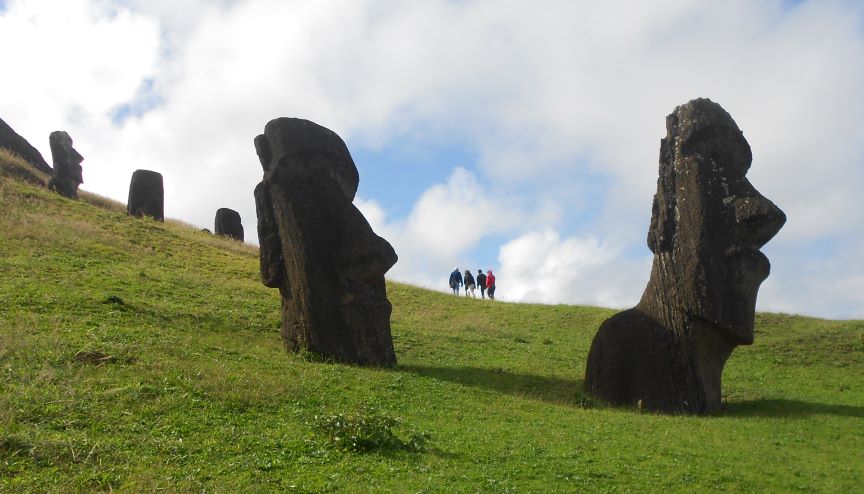
I had expected to be impressed by the moai, and they are definitely impressive, and omnipresent. Marae basically border the whole coastline, though many of the moai are no longer standing or never actually got as far as being placed on their stone platforms, the sheer numbers and scale alone are awe-inspiring.


Somehow I hadn't expected the rugged scenery - the sheer cliffs and wild waves of the west coast, it was truly breathtaking. From the oceanfront eateries in Hanga Roa you can watch youngsters out surfing the formidable waves.


 The quality of the light was also quite startling. The only other place comparable I know was Venice, in winter.